Change behaviour by playing with it
Day Games aren't about learning something new. They're about making contact with what's already there.
We use simple, carefully built games - not to explain behaviour, but to meet it.
When you play, patterns show themselves. The way you handle uncertainty, or coordinate with someone, or the point where your effort suddenly tips into too much and then, just as suddenly, isn't there at all.
No analysis required. Sense first, and the meaning tends to follow on its own.
People often notice it later, in how they move through a meeting, a hard conversation, a moment of pressure.

"It's like playing Fight Club in daily life." - Loïc, startup consultant
"These games help me loosen up the rigid pictures I hold about myself, and I feel better." - Sven, wellness product developer
"The games easily became part of my day. Every time it's a fine realisation that I can look at it all from another point of view - which makes me live more lightly." - Lisa, professional dancer
"Great to see my routines in a different way without actually changing my life on the outside. Inner perspective shifts." - Anton, artist & surf coach
"Each day becomes a bit more funny." - Gianluca, physiotherapist
"It's a fun idea. I play with them, and pass them on to others in need." - Dean, corporate creativity coach

Why games work
Anyone can design a workout that makes you suffer, or pile on more drills and more information. That's the easy part.
What actually shifts behaviour is contact. A game sets up the conditions where contact happens by itself - with your body, with whoever you're with, with the moment you're standing in. After that, nothing has to be forced. The thing reorganises itself.
There's a reason for the form, too. If I tell you what I see in you - where you've gone rigid, where you brace before anyone's even said anything - you'll defend yourself. Everyone does. So instead the game lets you catch it on your own, through the side door, where there's no one to argue with.

What you’ll notice
The games put your movement and attention into slightly unfamiliar conditions, so your habits surface where you can actually see them, without the usual layer of judgement on top. Some of what comes up is quiet. Some of it surprises you.
People often leave a little lighter, a little less busy inside.
And rather than learning what to do, you start seeing how you do things - which quietly changes what you're able to choose.
A small one, right now
No need to wait for week one.
Wherever you're sitting: stop. Don't fix anything. Just notice where your hands have ended up, whatever's tight in your face, which shoulder is riding higher than the other. Keep breathing.
Now change one thing. Cross the other arm on top, or open a joint, or let your chin rise a little.
That's it. That's the game. Not to sit better, though you might - the point is the half-second of separation, the small gap where you stopped being inside the posture and started seeing it. That gap is where choice lives, and most of the games are just different doors into it.
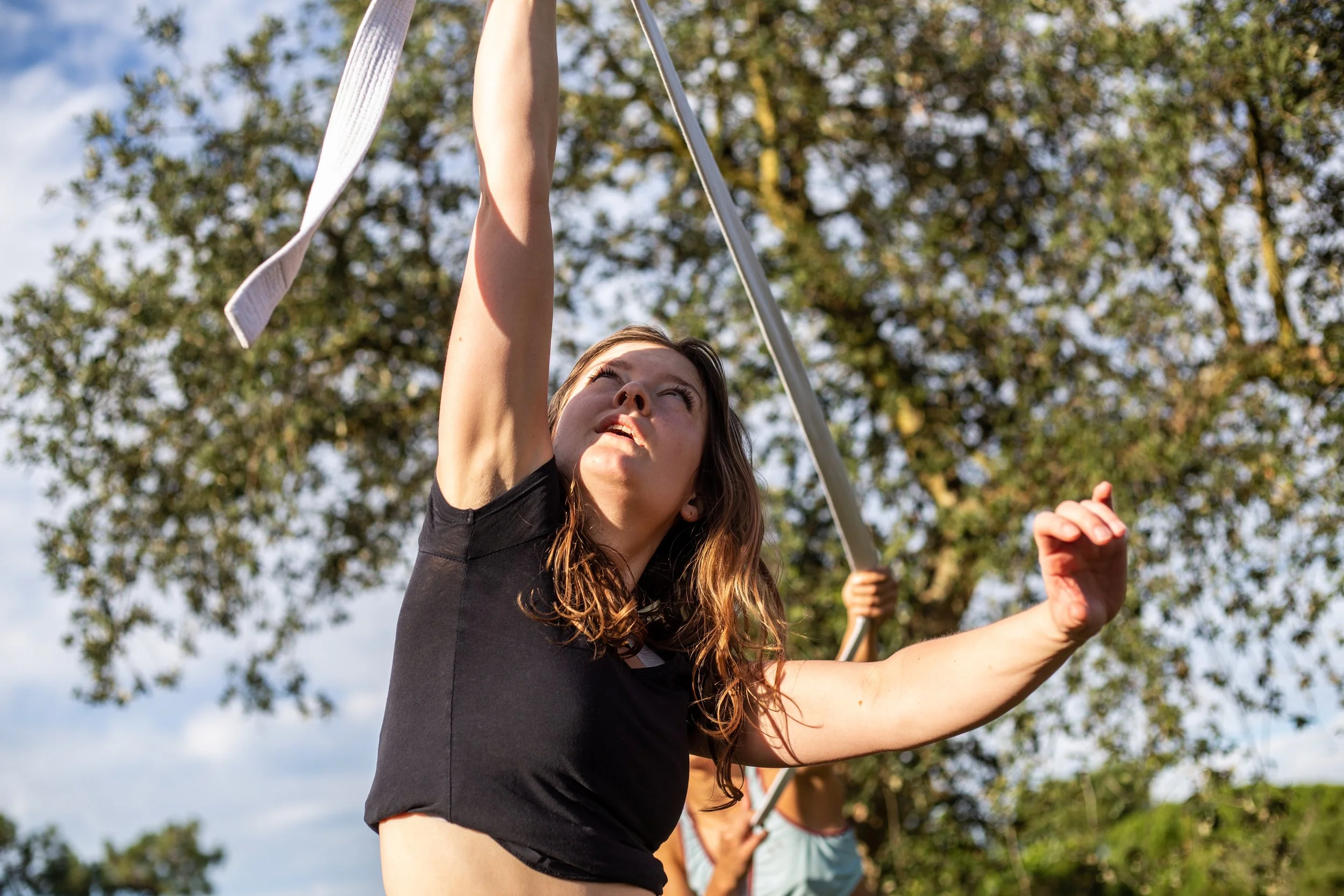
How Day Games continue
They don't end when the day does.
Each week you get one prompt - a small proposition to take into your own life, alone or with other people. Not a workout to complete. More like an invitation you can accept whenever it fits.
The games help you catch your patterns a little sooner, stay in some contact with your body and your attention, and let a bit of play back into the parts of life that have gone automatic - work, movement, the people closest to you.
Some people play every week. Others go quiet for a while and come back when they feel the need. Consistency isn't the point. What you're after is a living thread you can pick up again when it matters.
One thing worth saying plainly: keep it so light that not doing it would be almost laughable. The moment a game turns into one more thing to keep up with, it's lost the plot. These aren't reps to log. They're small wake-ups, and then you get on with your day.

Who this is for
Day Games suit you if you learn more by doing than by being told, and you'd genuinely rather poke around in something yourself than be handed the instructions.
They work on their own, and they can also open a door to deeper work. Some people keep them as a standalone practice.
For others, the games slowly become a way of sensing whether one-on-one work might make sense - and if that curiosity shows up, it gets followed later, never in the middle of the day itself.

What you receive
52 games, one a week, each a simple prompt that points you toward direct experience instead of more instruction.
A slow walk through behaviour, attention, and the way you coordinate yourself - meeting your own resistance by playing with it rather than pushing against it.
And a small international group moving through it alongside you, with no pressure to perform or to share anything you'd rather keep to yourself.
The value isn't fast change. It's something slower and more durable: a way of relating to obstacles that turns them into useful information, and a kind of learning that sticks around because it grew out of experience rather than motivation.
